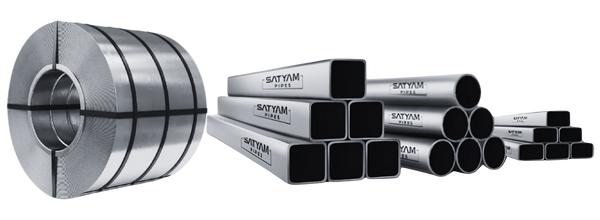
Patra Pipe Manufacturer: Manufacturing Process & Industrial Uses
Complete guide to patra pipe manufacturing and applications
Introduction
Patra pipes are one of the most widely used steel pipe products in India, especially across construction, fabrication, infrastructure, and agricultural sectors. Known for their strength, cost efficiency, and versatility, patra pipes play a critical role in both structural and non-structural applications.
Choosing the right patra pipe manufacturer is essential to ensure consistent thickness, proper welding, long service life, and compliance with industry standards. This blog explains how patra pipes are manufactured, their key characteristics, and the major industrial uses that drive demand across India.
What Are Patra Pipes?
Patra pipes are mild steel (MS) pipes manufactured from steel coils or sheets using forming and welding processes. Unlike precision ERW pipes, patra pipes are primarily used in applications where structural strength, affordability, and availability are more important than tight dimensional tolerances.
They are typically available in:
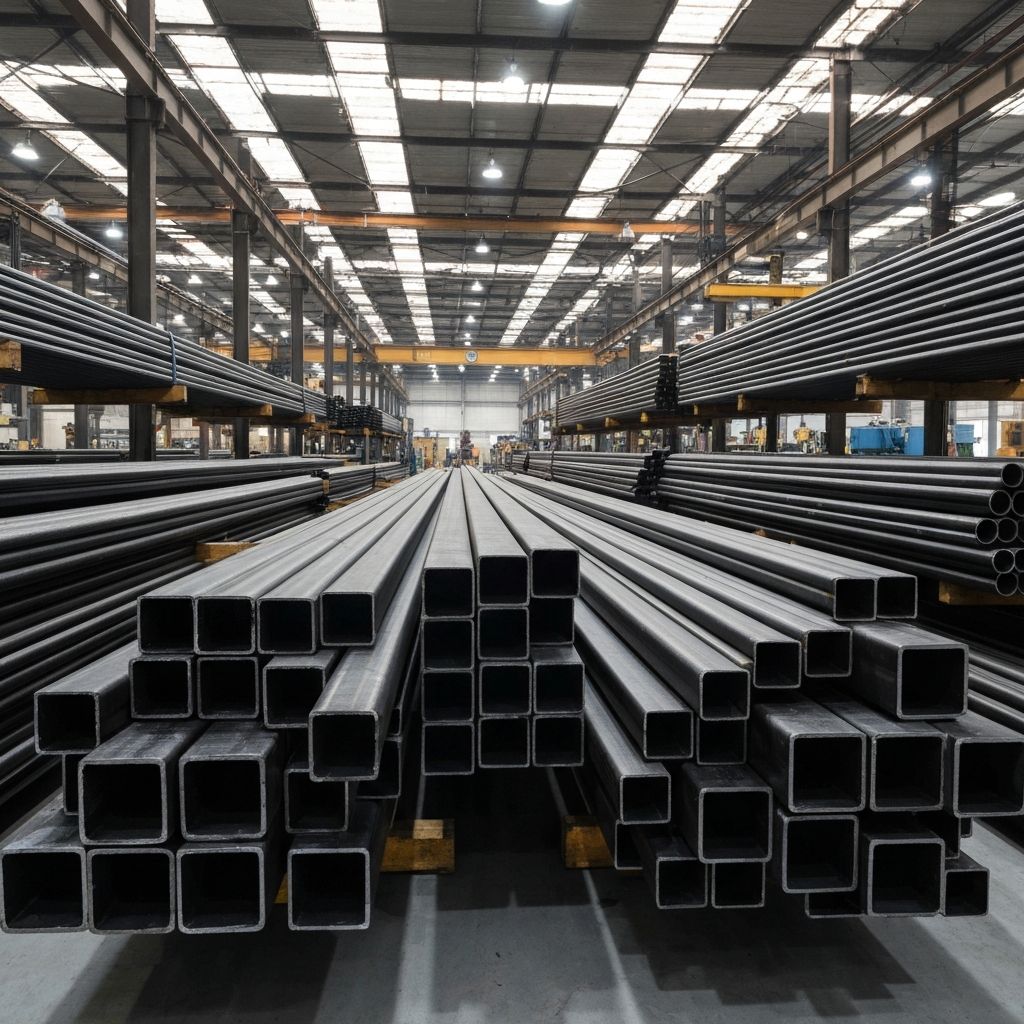
- Round, square, and rectangular sections
- Black (uncoated) finish
- Standard commercial grades
Patra Pipe Manufacturing Process
A reliable patra pipe manufacturer follows a controlled production workflow to ensure durability and consistency.
1. Raw Material Selection
High-quality HR coils or steel sheets are selected based on:
- Chemical composition
- Mechanical strength
- Surface quality
Consistent raw material quality directly impacts weld integrity and pipe life.
2. Sheet / Coil Slitting
Steel coils are slit into strips of required widths depending on pipe diameter and wall thickness.
3. Forming Process
The slit strips are passed through forming rollers that gradually shape the flat steel into a circular or hollow section.
4. Welding
Edges of the formed steel are welded using:
- Electric resistance welding (ERW) or
- Conventional welding methods (depending on grade and usage)
The weld seam is carefully controlled to ensure structural stability.
5. Sizing & Straightening
After welding, pipes pass through sizing rollers to:
- Achieve uniform diameter
- Improve roundness
- Remove bending or deformation
6. Cutting to Length
Pipes are cut into standard or custom lengths as per customer requirements.
7. Quality Inspection
Before dispatch, patra pipes undergo:
- Visual inspection
- Dimensional checks
- Weld seam verification
Reputed manufacturers ensure only compliant pipes reach the market.
Key Characteristics of Patra Pipes
- High load-bearing capacity
- Cost-effective compared to precision pipes
- Easy to cut, weld, and fabricate
- Suitable for rough and heavy-duty usage
- Widely available across India
Industrial Uses of Patra Pipes
Patra pipes are used across multiple industries due to their versatility.
1. Construction & Infrastructure
- Scaffolding systems
- Temporary structures
- Supports and frames
2. Fabrication & Engineering
- Metal frames
- Industrial sheds
- Storage racks
3. Agriculture
- Fencing
- Greenhouse structures
- Equipment supports
4. Furniture & Utility Products
- Beds, tables, racks
- Display stands
- Utility frames
5. Transportation & Logistics
- Truck body structures
- Loading platforms
- Warehouse systems
Why Choose a Reliable Patra Pipe Manufacturer?
A trusted manufacturer ensures:
- Consistent wall thickness
- Strong weld joints
- Uniform supply availability
- Compliance with Indian steel standards
Poor-quality patra pipes often lead to:
- Early corrosion
- Weld failure
- Structural instability
This is why sourcing from an established manufacturer is critical for long-term performance.
Patra Pipes vs ERW Pipes (Quick Comparison)
| Feature | Patra Pipes | ERW Pipes |
|---|---|---|
| Cost | Lower | Higher |
| Precision | Moderate | High |
| Applications | Structural, fabrication | Plumbing, precision use |
| Standards | Commercial | IS / ASTM |
Conclusion
Patra pipes remain an essential steel product for industries that require strength, affordability, and flexibility. Understanding the manufacturing process and use cases helps buyers make informed sourcing decisions.
Choosing the right patra pipe manufacturer ensures consistent quality, better project outcomes, and long-term value. For quality steel pipes and related products, explore our ERW round pipes, square pipes, and rectangular pipes.
FAQs
Q1. What is a patra pipe?
Patra pipes are mild steel pipes manufactured from steel sheets or coils and commonly used for construction, fabrication, and structural applications.
Q2. How are patra pipes manufactured?
Patra pipes are manufactured by forming steel sheets or coils into tubular shapes and welding the edges, followed by sizing, straightening, and cutting.
Q3. What are the main uses of patra pipes?
Patra pipes are widely used in construction, scaffolding, fabrication, agriculture, furniture manufacturing, and industrial structures.
Q4. Are patra pipes suitable for structural applications?
Yes, patra pipes are commonly used in structural and load-bearing applications where cost-effectiveness and strength are required.
Q5. How do patra pipes differ from ERW pipes?
Patra pipes are more cost-effective and used mainly for structural purposes, while ERW pipes offer higher dimensional accuracy and are used in precision applications.
Looking for Quality Steel Pipes?
Contact Satyam Steel for high-quality steel pipes and comprehensive manufacturing solutions for your industrial needs.