Jal Jeevan Mission & Steel Pipes
Meeting India's water infrastructure needs with quality pipes
Introduction: The Jal Jeevan Mission Impact
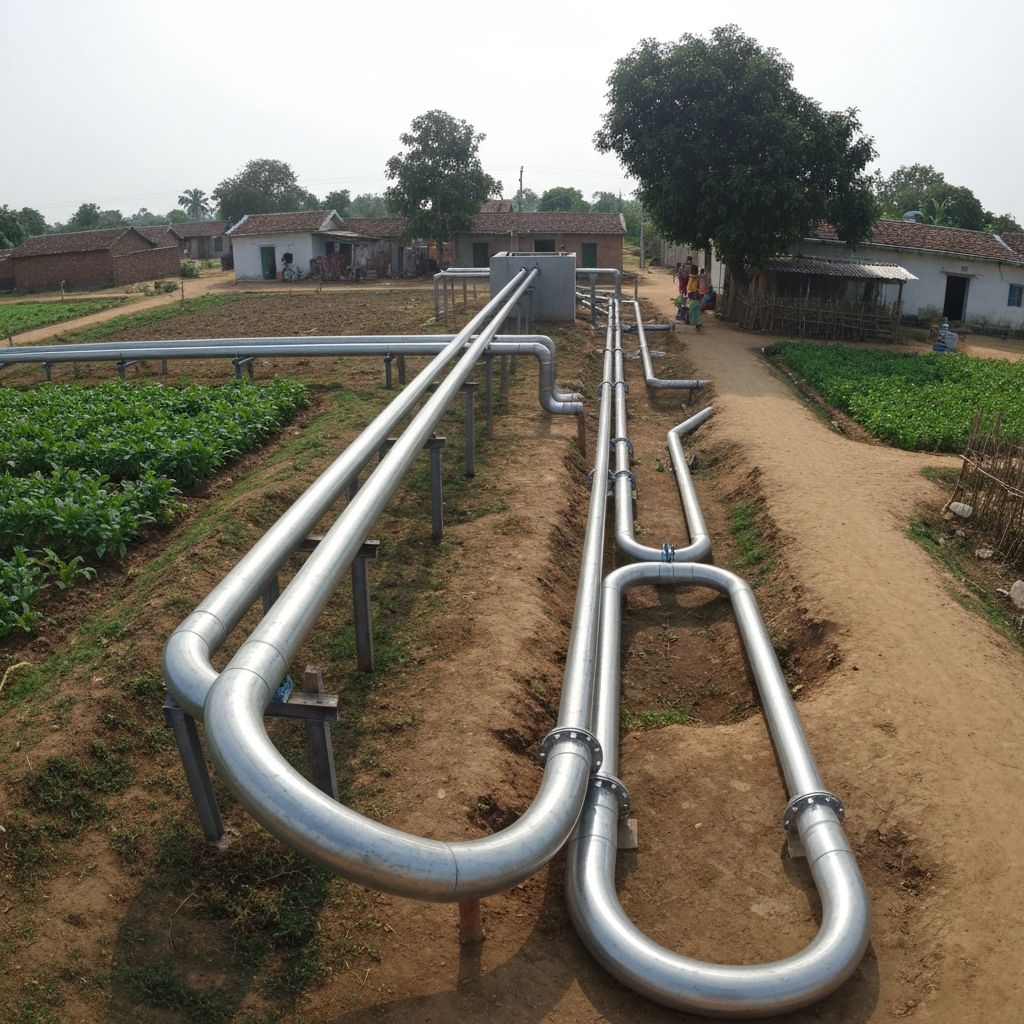
Clean, piped drinking water to every household—this is the promise of India's Jal Jeevan Mission. Launched as part of India's development agenda, the mission has been extended with an allocation of ₹67,000 crore, making it one of the largest water infrastructure programs globally. At the heart of this ambitious initiative lies an enormous demand for quality steel pipes. The scale of pipe requirements is staggering: millions of kilometers of distribution networks are being built and upgraded across rural and urban India, each requiring robust, durable, and reliable steel pipes.
What is the Jal Jeevan Mission?
The Jal Jeevan Mission, launched in 2019, is an initiative by the Government of India to provide safe piped drinking water to every rural household. Key objectives include:
- Ensuring functional household water connections to all rural dwellings
- Universal access to safe drinking water of adequate quantity and quality
- Strengthening water supply infrastructure in villages
- Supporting water resource management and conservation
- Building institutional mechanisms and capacity
With the recent extension and increased funding, the mission's scope is expanding into urban areas as well, creating enormous demand for water supply infrastructure and pipes.
The Pipe Demand Explosion
The scale of pipe requirements for the Jal Jeevan Mission is remarkable. Estimates suggest that over 20 million kilometers of water pipes will be needed to connect rural and urban households across India. This represents an unprecedented demand surge for:
- Distribution Pipes: Main transmission lines carrying water from treatment plants to villages
- Service Connections: Individual household connections ranging from small diameter to medium sizes
- Internal Infrastructure: Pipes for treatment plants, storage tanks, and booster pumps
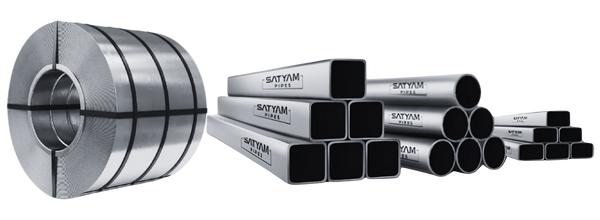
Our range of ERW round pipes and specialized water supply products are well-suited for these applications.
Why Steel Pipes for Water Supply?
Water supply networks demand specific material properties that steel pipes provide exceptionally well:
- Strength & Durability: Steel pipes withstand high internal pressures and soil loads without degrading
- Corrosion Resistance: Modern coating technologies protect pipes from rust, ensuring 50+ year lifespans
- Water Quality Preservation: Smooth internal surfaces minimize bacterial growth; inert material doesn't leach harmful chemicals
- Installation Reliability: Steel pipes can be reliably joined using time-tested methods—welding, threading, or flanging
- Cost Effectiveness: Superior cost-to-lifespan ratio compared to other materials
DI vs. MS Pipes: Understanding the Choices
Water supply networks employ two primary pipe types:
- Ductile Iron (DI) Pipes: Used for main transmission lines (larger diameters), offering excellent pressure handling and earthquake resistance
- Mild Steel (MS) ERW Pipes: Used for service connections and secondary distribution, providing cost-effectiveness and ease of installation
The choice depends on the specific application, pressure requirements, and soil conditions. Both are essential to creating a comprehensive water supply network.
Regional Impact: Water Infrastructure in West Bengal
States like West Bengal, with significant rural populations in regions around Durgapur, Asansol, and Raniganj, are seeing substantial Jal Jeevan Mission investments. Local steel pipe manufacturers and suppliers are playing a crucial role in meeting the region's water infrastructure needs.
Procurement Challenges and Opportunities
The Jal Jeevan Mission's implementation has highlighted both challenges and opportunities:
- Challenges: Massive volumes of pipes needed, quality consistency requirements, logistics in remote areas
- Opportunities: Sustained demand for quality pipe suppliers, government support for manufacturers, long-term supply contracts
Established suppliers like Satyam Steel, with proven manufacturing capability and quality track records, are well-positioned to capitalize on these opportunities.
Quality Standards and Compliance
Pipes supplied for the Jal Jeevan Mission must comply with stringent quality standards:
- Indian Standards (IS codes) for pipe dimensions, thickness, and material properties
- Water quality testing and approval from concerned water authorities
- Coating integrity and performance specifications
- Third-party testing and certification requirements
Our commitment to quality ensures all our products meet and exceed these standards.
FAQs
Q1. What is the Jal Jeevan Mission?
The Jal Jeevan Mission is an initiative by the Indian government to provide piped potable water to every rural household. The program funds water supply infrastructure, including the installation of millions of steel and plastic pipes and taps in villages.
Q2. Why are steel pipes used for water projects?
Steel pipes (both ductile iron and mild steel) are used in water supply networks due to their strength, durability, and resistance to internal pressure. They ensure long service life and are suitable for high-pressure distribution systems.
Q3. How does the Jal Jeevan Mission affect pipe demand?
With ₹67,000 crore allocated for clean water access, the Jal Jeevan Mission has significantly increased the demand for water pipes. Contractors and local bodies are procuring large quantities of DI and MS pipes to meet rural and urban water supply goals.
Supply Quality Water Pipes for Jal Jeevan Mission
Contact Satyam Steel for DI and MS ERW pipes that meet government standards for the Jal Jeevan Mission and other water infrastructure projects.