India Infrastructure 2026: Driving Steel & Pipe Demand
How government investment is fueling robust demand for steel and pipes
Introduction: India's Infrastructure Boom
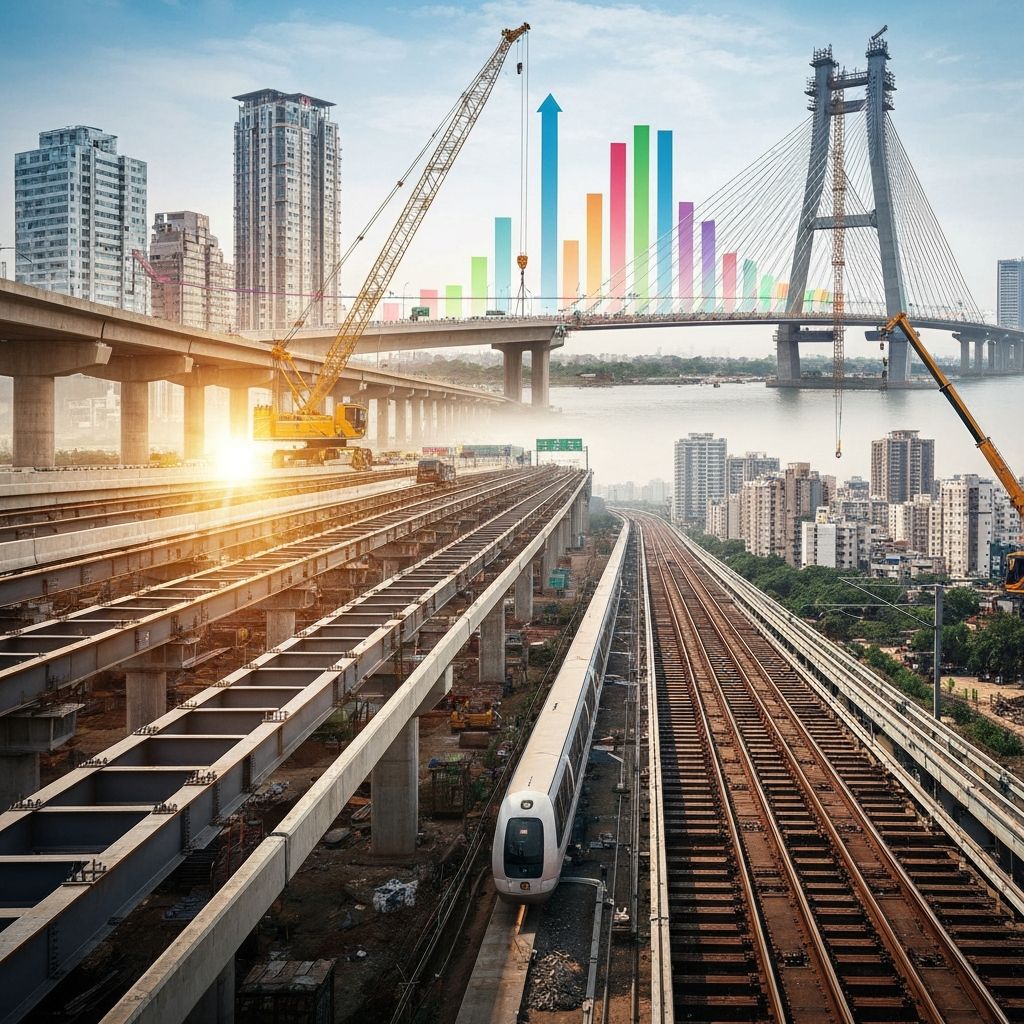
India's commitment to transforming its infrastructure is translating into unprecedented demand for steel and pipes. From highway expansions and railway networks to metro systems and smart city development, the scale of infrastructure projects underway is extraordinary. The Union Budget 2026 allocates ₹12.2 trillion in capital expenditure, with significant portions dedicated to infrastructure development. This investment surge is creating robust, sustained demand for structural steel, hot-rolled coils, and specialized steel pipes—a opportunity that suppliers like Satyam Steel are well-positioned to capture.
Key Infrastructure Projects Driving Demand
Several major infrastructure initiatives are consuming large volumes of steel and pipes:
- Highway Expansion: The National Highway Authority is continuing its aggressive highway construction program, requiring extensive steel beam and pipe infrastructure
- Railway Development: High-speed rail corridors, metro rail systems, and suburban rail expansion projects use significant quantities of steel
- Urban Development: Smart city projects, water supply systems, and sewage infrastructure require millions of tonnes of steel pipes
- Industrial Corridors: Development of dedicated freight and economic corridors requires substantial steel infrastructure
- Port and Airport Expansion: Capacity enhancement at major ports and airports drives steel demand
Budget 2026 Capital Expenditure: A Game Changer
The allocation of ₹12.2 trillion in capital expenditure for 2026–27 represents the government's clear prioritization of infrastructure development. This includes:
- ₹2.4 trillion for road infrastructure (highways, rural roads)
- ₹700 billion for railway infrastructure
- ₹600 billion for urban development and water supply
- ₹500 billion for renewable energy infrastructure
- Remaining capital allocation for ports, airports, and telecom
This unprecedented investment is expected to sustain steel demand growth at 7–10% annually through 2026 and beyond.
Steel Demand Surge: What the Numbers Show
India's steel consumption reached approximately 130 million tonnes in 2025–26 and is projected to grow to 140 million tonnes in 2026–27, driven largely by infrastructure projects. This growth rate of nearly 9% annually is exceptional and reflects the intensity of infrastructure development. For steel pipe manufacturers, this translates into consistent order pipelines and secure revenue streams.
Types of Steel and Pipes in High Demand
Infrastructure projects require diverse steel products and pipe types:
- Structural Steel: MS hot-rolled coils and beams for bridge and building construction
- ERW Pipes: Round, square, and rectangular pipes for structural applications and utility infrastructure
- Water Mains: Large-diameter pipes for water supply and sewage systems
- Foundation Piles: Specialized pipes for foundation work in buildings and infrastructure
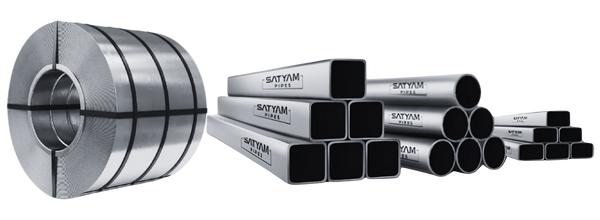
Our range of products—including MS hot-rolled coils, ERW round pipes, and billets, blooms, and slabs—positions us to serve all these infrastructure segments.
Regional Impact: Opportunities in Industrial States
Steel-manufacturing regions like Durgapur, Asansol, and Raniganj in West Bengal are experiencing heightened activity as these manufacturing hubs supply steel and pipes to infrastructure projects across India. The proximity to raw materials, established logistics networks, and skilled workforce make these regions critical supply points.
Supplier Readiness: Meeting Surging Demand
The surge in infrastructure demand requires steel suppliers to be well-prepared. Key considerations include:
- Manufacturing capacity to scale production quickly
- Quality consistency to meet large project specifications
- Logistics capability for timely delivery
- Financial stability to support sustained growth
Satyam Steel's integrated manufacturing facilities, commitment to quality, and established distribution network position us as a reliable partner for infrastructure projects of all scales.
Long-Term Outlook: Sustained Growth
Infrastructure development in India is not a short-term cycle—it reflects a multi-year, government-backed commitment to modernizing the nation's backbone systems. This provides confidence for suppliers to invest in capacity expansion and technology upgrades, knowing demand will remain strong through the 2026–2030 period and beyond.
FAQs
Q1. Which infrastructure projects use the most steel?
Major infrastructure projects like highways, metro and rail networks, bridges, and industrial corridors use large volumes of structural steel (beams, rails, coils) and steel pipes. Government programs like highway expansion and urban metro rail deployment are key drivers.
Q2. How is the 2026 budget affecting steel demand?
The 2026–27 Budget proposes ₹12.2 trillion in capital spending, emphasizing infrastructure development. This government capex and new schemes for cities are expected to sustain strong demand for steel and construction materials over the next year.
Q3. Why is steel demand expected to grow in India?
India's steel demand is forecast to grow by nearly 7–10% in 2026, fueled by infrastructure projects (roads, metro, housing) and industrial expansion. Government spending on highways, railways, and urban development is pushing steel consumption to new highs.
Supply Quality Steel for Infrastructure Projects
Contact Satyam Steel to discuss your infrastructure project requirements and secure reliable, high-quality steel and pipe supplies.