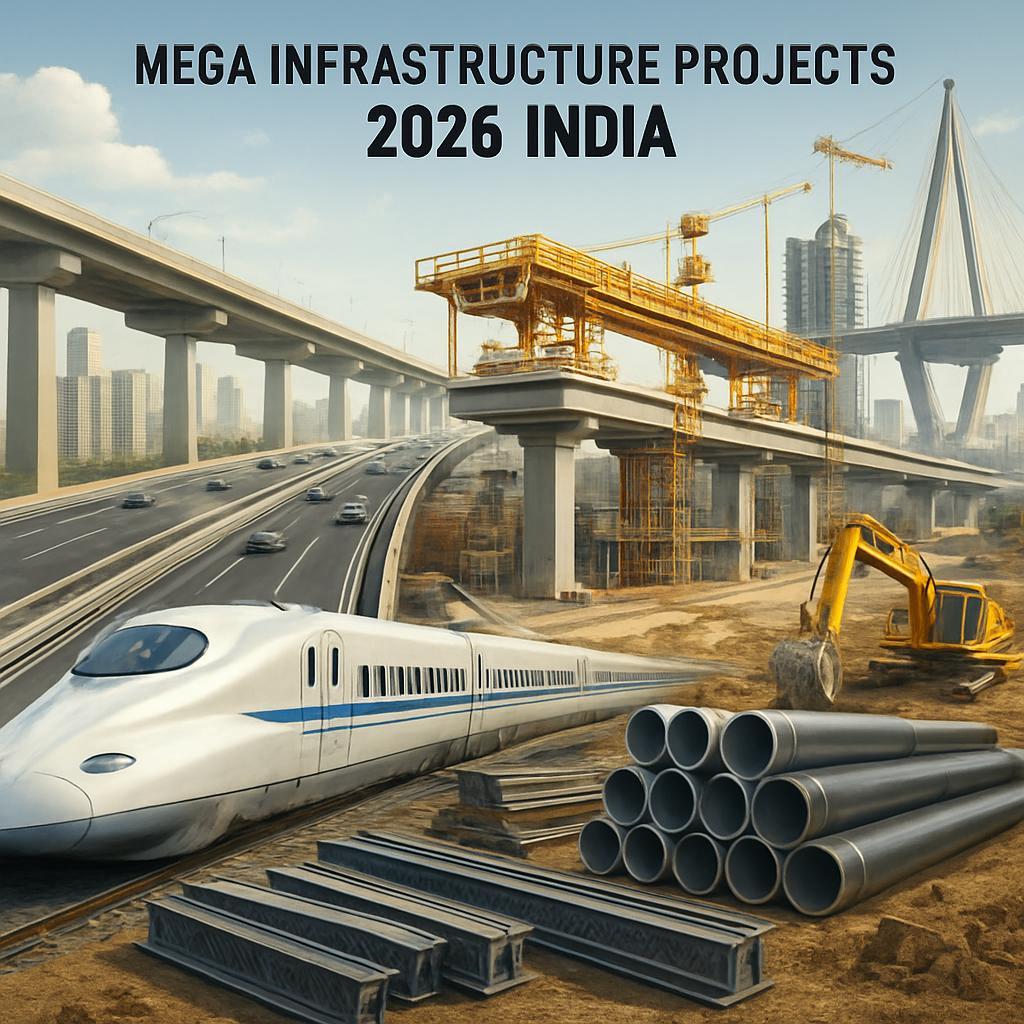
Mega Infrastructure Projects 2026
How India's ₹12.2 trillion capex is driving record steel pipe demand
India's Infrastructure Surge: 2026 Trends
India is witnessing an unprecedented infrastructure boom. The Union Budget for FY2026–27 allocates a record ₹12.2 trillion to infrastructure capex—marking a significant increase from ₹11.2 trillion in the previous year. This historic commitment spans highways, railways, urban infrastructure, waterways, and energy projects, creating a tsunami of demand for structural steel and pipes. Industry analysts forecast 7–10% annual growth in Indian steel consumption through 2026, with infrastructure and urbanization serving as the primary drivers.
Major Projects Driving Pipe Demand
Several flagship projects exemplify the scale of infrastructure spending and the corresponding pipe requirements:
- High-Speed Rail: The Mumbai–Ahmedabad bullet train and proposed Delhi–Kolkata high-speed rail require massive volumes of ERW and structural steel pipes for bridges, tunnels, and utility lines.
- Highway & Expressway Projects: The expanded Bharatmala initiative (₹7 trillion) includes the Delhi–Mumbai Expressway and other mega corridors, necessitating reinforced steel pipe frameworks for overpasses and drainage systems.
- Dedicated Freight Corridors: Expanding rail freight infrastructure demands specialized steel pipes for signal systems, utility ducts, and structural support.
- Port Development (Sagarmala): Major port enhancements require large-diameter pipes for water intake, sewage, and industrial utilities.
- Smart City Water Networks: Urban smart city projects integrate advanced water supply and sewage infrastructure, requiring millions of meters of quality steel pipes.
Types of Pipes in Infrastructure Use
Different infrastructure segments demand specific pipe products tailored to their requirements:
- Large-Diameter DI/GI Pipes: Essential for main water and sewage lines in urban infrastructure and water supply systems.
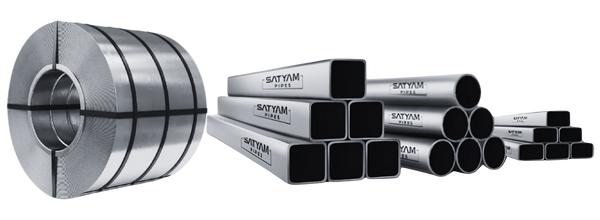
- ERW Round Tubes: Used for scaffolding, structural frameworks, and utility installations in construction and railway projects. Learn more about our ERW round pipes.
- ERW Square & Rectangular Tubes: Ideal for modular construction, gates, and structural fabrication in highway and building projects. Explore our square and rectangular pipe options.
- Thick-Wall Specialty Pipes: Critical for foundation systems, high-pressure applications, and specialized engineering requirements.
Implications for Suppliers
The infrastructure boom presents both opportunities and challenges for pipe suppliers:
- Scale Manufacturing: Suppliers must expand production capacity to meet multi-million ton annual demands for pipes across projects.
- Quality & Consistency: Large infrastructure projects demand stringent quality control, on-time delivery, and consistency that separates reliable suppliers from competitors.
- Regional Stockpiling: Strategic inventory positioning near project hubs (e.g., Durgapur, Asansol in West Bengal; industrial corridors across India) ensures timely supply.
- Supply Chain Resilience: Supplier networks must absorb fluctuations in raw material costs and maintain predictable delivery schedules despite logistics challenges.
Satyam Steel's Role in India's Infrastructure Story
As a fully integrated steel manufacturer with a captive power plant and DRI production, Satyam Steel is well-positioned to capitalize on the infrastructure boom. Our manufacturing facilities in Durgapur and Asansol enable us to supply large volumes of quality pipes to major infrastructure projects across India. Our commitment to innovation and sustainability aligns with India's infrastructure vision.
Conclusion & Call to Action
Infrastructure is not a short-term cycle—it represents India's long-term vision for development and economic growth. The ₹12.2 trillion capex allocation signals sustained, multi-year demand for quality pipes. For project managers, contractors, and planners, sourcing pipes from reliable, quality-focused suppliers like Satyam Steel is essential to project success. Contact us today to discuss how we can support your infrastructure projects with dependable, high-quality steel pipes.
FAQs
Q1. Which infrastructure projects use the most steel?
Large-scale projects like highways, metro rail networks, bridges, and industrial corridors use enormous volumes of structural steel and pipes. Government initiatives like Bharatmala (highway expansion) and metro rail deployment are key drivers of demand.
Q2. How does the 2026 Budget affect steel pipe demand?
The 2026–27 Union Budget proposes ₹12.2 trillion in capital spending on infrastructure. This historic capex, including allocations for roads, railways, urban water, and energy systems, is expected to sustain 7–10% annual growth in steel and pipe consumption.
Q3. What types of pipes are used in major infrastructure?
Infrastructure projects use diverse steel pipe types: large-diameter DI and GI pipes for water and sewage; MS ERW round, square, and rectangular pipes for structural frameworks; and specialized thick-wall pipes for foundations and high-pressure applications.
Q4. Which regions in India see the most pipe demand?
Industrial states like West Bengal (Durgapur–Asansol hub), Odisha, and Maharashtra have high manufacturing output. Proximity to raw materials and infrastructure projects means these hubs supply pipelines nationwide.
Supply Quality Pipes for Infrastructure Projects
Satyam Steel is ready to support India's mega infrastructure projects with reliable, high-quality steel pipes. Contact us today to discuss your pipe requirements and delivery timelines.